

A pond is the most valuable thing you can add to a wood. Not the tidiest, and certainly not the quickest, but nothing else draws in so much life so fast. Fill a hole with rainwater in spring and by summer you will have water beetles, pond skaters and the first dragonflies; frogs usually arrive the following spring, newts soon after.
Woodland ponds fail in predictable ways. They sit in deep shade and turn soupy, they fill with leaves, or they are dug in the wrong place and never hold water. Get the siting and the lining right, and the planting almost looks after itself.
Choosing the spot: light, roots and leaf fall
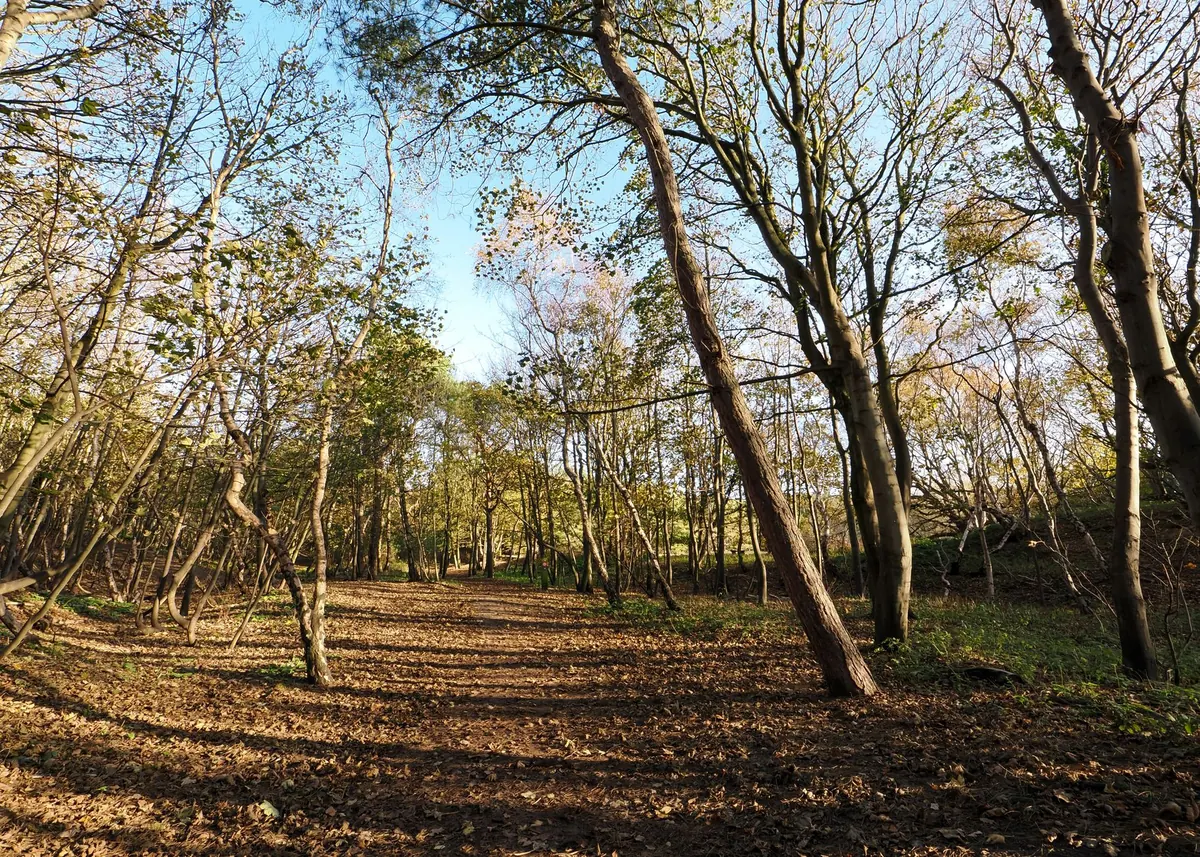
Look for dappled light rather than deep shade. A woodland pond wants a few hours of direct sun a day, ideally around midday, because dragonflies, damselflies and most flowering aquatics need warmth. An open clearing is fine; the gloom under dense beech or conifer is not.
Watch what falls. Leaves are the quiet enemy of a small pond. Oak, beech, sycamore and ash can drop enough in one autumn to half-fill a shallow basin, and rotting leaves strip oxygen and build a black sludge on the bottom. If heavy canopy is unavoidable, dig deeper than you would in a garden, keep the deepest point clear as a sump, and net leaves out each November.
Roots matter too. Digging within the root zone of a mature tree damages it and can destabilise it. Stay outside the spread of the crown where you can, and never cut through roots thicker than your wrist. If trees must come out to let light in, check whether a felling licence is needed — small volumes of timber are usually exempt, but the rules differ across the UK.
Size, depth and shape
Bigger is more forgiving, but a pond of 2 by 3 metres will do a great deal if it is built well. Aim for a patchwork of depths: shallow shelves of 10–30cm, a middle zone of 40–60cm, and a central area of at least 60cm, or 80–90cm if you have room. That deepest section carries frogs and newts through a hard winter and keeps dragonfly larvae alive through a dry summer.
The shallows earn their place too. They warm first in spring, which is where frogs choose to lay, and they let birds and hedgehogs drink without falling in. Give at least one side a long, gradual slope — a beach — so anything that tumbles in can climb out.
An irregular outline with a bay or two looks far more natural than a circle, and it creates more edge, which is where most pond life happens. Skip the tidy kidney shape sketched on paper; it rarely looks right in the ground.
Lining the hole
Keep topsoil and subsoil in separate heaps as you dig; the topsoil is the good stuff, and you will want it for planting shelves and dressing the spoil. Pick out sharp stones and cut back roots in the basin, then line the hole with a geotextile underlay. It is a dull job that will save the liner.
For a woodland pond of any size, butyl rubber (EPDM) is the usual choice: flexible, long-lived and reasonably tolerant of roots. Order a sheet allowing for the depth plus a 30–45cm overlap all round — roughly, length plus twice the maximum depth plus the overlap, for each dimension. Let it warm in the sun for an hour before laying; cold butyl is stiff and awkward to fold.
Fill slowly, tucking and pleating the liner into the curves rather than pulling it tight. Leave the pond to settle for a few days, then trim the liner, keeping enough to tuck under turf or stone. Hide the edge with soil, gravel or paving set slightly proud, so rainwater does not wash nutrients straight in. Rainwater from a butt is the ideal fill; tap water is fine, though its nutrients feed a flush of algae that usually settles once plants get going.
Planting for frogs, newts and dragonflies
Plant once the water has cleared and warmed, in late spring or early summer, using native species of British origin where you can. Think in layers.
- Marginals for the shallows — marsh marigold, water forget-me-not, water mint, ragged robin, purple loosestrife, soft rush and sedges. Dragonfly nymphs climb these stems when they emerge, and young amphibians hide among them.
- Submerged oxygenators — hornwort, water starwort and spiked water-milfoil, planted in baskets of loam or weighted with a stone. They compete with algae and give newts leaves to fold their eggs into.
- Surface and floating — frogbit, broad-leaved pondweed and a dwarf waterlily, which shade the water in summer. Frogbit copes with light shade, which makes it useful here.
- The damp fringe — meadowsweet, bugle, yellow pimpernel, ferns and sedges around the rim, to soften the edge and shelter emerging amphibians.
Two things to leave out. Fish and ducks: fish eat spawn, tadpoles and dragonfly larvae, and ducks foul the water and strip the plants. And non-native aquatics such as floating pennywort, New Zealand pygmyweed, water fern and parrot's feather — invasive, and in some cases illegal to plant or allow to spread. Never move spawn, plants or water between ponds; amphibian disease and invasives travel that way.
Safety, protected species and permissions
A steep-sided pond is a hazard to more than children. Hedgehogs, voles and frogs drown in lined ponds with sheer edges, so build in a way out: a sloping beach, a stone ramp, or a rough plank angled into the water.
For people, treat the pond as you would any open water. Keep the deep section small, put a shallow shelf on the accessible side, and fit a rigid grille just below the surface if children use the wood. If the site is open to the public, or used by school or community groups, speak to your insurer before digging. Occupiers' liability is real, and it is cheaper to plan for than to argue about later.
Then run through the following before you break ground:
- Protected species. Great crested newts, water voles, otters, bats and nesting birds are all legally protected. If you find evidence of any of them, stop and contact the statutory agency for your part of the UK.
- Designated sites. Work within a SSSI or similar designation generally needs consent from the statutory conservation body.
- Watercourses. Never dam, divert or take water from a stream or ditch without permission from the Environment Agency, Natural Resources Wales or SEPA. A stream-fed pond is a far bigger project than a lined hole.
- Felling and planning. Check whether a felling licence is needed, and ask the local planning authority about any conditions affecting the site.
This is general guidance rather than legal advice. Where protected species or designated sites are involved, get proper advice first.
Keeping it wild
The first season will look raw and the water will almost certainly go green. Resist emptying and refilling it. Algae is a phase, and so is the murk as silt settles; plants, invertebrates and time sort out most of it.
After that the work is small and seasonal. Net leaves in autumn. Pull surplus duckweed or blanket weed out by hand in summer and leave it on the bank for a day so anything caught up can crawl back. Cut back rampant marginals every few years rather than every year. Leave the surrounding grass and leaf litter alone — that is where frogs, newts and dragonflies spend most of their lives.
Then leave it be, and watch.
Photo: xeppo / Pixabay